

 Packaging today does far more than simply hold a product.
In industries such as beauty, personal care, and pharmaceuticals, container design plays a major role in shaping brand perception and influencing purchasing decisions. Unique shapes, reverse tapered, oval containers, and custom packaging styles help products stand out on crowded shelves.
However, these unique packaging designs can create challenges on the production floor, particularly during leak testing. Containers that are unstable or asymmetrical may shift or rotate, making it more difficult to achieve a reliable seal during testing. When a proper seal cannot be established, the result can be inconsistent test outcomes, false rejects, and reduced confidence in product integrity.
This is where many leak testing systems begin to encounter handling and inspection challenges.
In this blog, we’ll explore why reverse taper, oval, and unstable containers create leak testing challenges and how the ALPS Inspection FlexPitch® Solo Leak Testing System is specifically engineered to handle these difficult container types with greater stability and inspection accuracy.
Why Reverse Taper, Oval, and Small Plastic Containers Create Leak Testing Challenges
Container design directly affects how a package behaves during inspection. Minor shifts in container alignment can alter seal interaction, making consistent pressure decay testing more difficult to maintain.
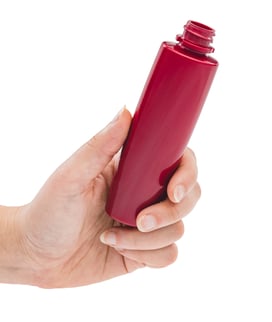
Small, non-round, and uniquely shaped containers, such as tall, lightweight shampoo bottles, are often designed with aesthetics and consumer appeal prioritized over manufacturing functionality. These unconventional packaging designs can make containers particularly difficult to stabilize during leak testing inspection.
Common container challenges include:
-
Reverse taper bottles — Often used for hair and personal care products — feature a narrower base and a wider shoulder that can contribute to movement or rotation as they travel through a leak tester. If these containers touch each other, like when there’s a transfer from one conveyor to another, or backlog in front of a timing screw, they can tip over.
-
Oval and asymmetrical containers — Common in shampoo, cosmetic, and beauty packaging — lack the repeatable contact points of a round bottle, meaning each container may present itself inconsistently to the test head.
-
Small plastic containers — Mascara tubes and other compact beauty or personal care packaging are especially sensitive to handling variation during inspection due to their lightweight construction, compact size, and complex geometries.
-
Pharmaceutical packaging — Eye droppers and other over-the-counter or prescription products that have a tendency to move on the conveyor during testing.
For most of these containers listed in this section, the issue is handling them, as they don't react well to being backlogged or transferred, as they jam or fall over. Which makes a moving-head leak tester like the FlexPitch Solo ideal, as it does not require transfers to/from another conveyor for testing, and there is no tooling, so backlogs are not needed for testing.
How Unstable Container Designs Impact Pressure Decay Inspection Reliability
 Pressure decay leak testing is a non-destructive quality control method used to detect leaks and ensure the integrity of containers. This type of leak testing relies on creating a clean, repeatable seal at the container finish. When containers shift, rotate, or sit inconsistently during testing, seal conditions can change from one cycle to the next, directly impacting inspection accuracy.
On a small container, even minor container movement can affect pressure decay readings and produce unreliable results. In some cases, inconsistent container positioning can prevent a proper seal from forming between the container and the test probe. When this occurs, the system may register a fill failure and reject the container, even though no leak is present. This type of error is known as a false reject.
This type of challenge is especially common with reverse taper, oval, lightweight, or uniquely shaped containers that lack stability during handling and testing. As packaging designs become more innovative in beauty and pharmaceutical applications, blow molding manufacturers need leak testing systems capable of maintaining consistent container control and seal integrity.
Why a Moving-Head Leak Tester Is Ideal for Reverse Taper and Unstable Plastic Containers
Handling stability becomes increasingly important when inspecting reverse taper, oval, lightweight, or asymmetrical containers. This is where moving-head leak testing offers a significant advantage for beauty, personal care, and pharmaceutical packaging applications.
Rather than requiring the container to stop at a fixed inspection point, moving-head systems allow containers to remain on the same conveyor throughout the test process. The test head travels with the container during inspection, helping maintain consistent alignment and seal contact from the start of the test through completion.
For difficult-to-handle containers, this approach helps reduce the effects of shifting, rotation, or inconsistent presentation. A moving-head leak tester also supports smoother product flow through the entire pressure decay inspection process, which is especially beneficial for lightweight or unstable containers that may be sensitive to abrupt handling transitions.
Designed for a Variety of Unique Packaging Designs
Moving-head leak testing is particularly well-suited for rigid plastic container converters running a variety of package styles across a single production line. Whether inspecting reverse taper shampoo bottles, oval cosmetic containers, small beauty packaging, or pharmaceutical products with tamper-resistant features, the system is designed to accommodate changing package formats while maintaining repeatable inspection conditions.
By combining synchronized container handling with moving-head pressure decay testing, blow molding manufacturers can improve inspection consistency for challenging package designs while maintaining production efficiency and product quality standards.
The ALPS FlexPitch Solo Is Purpose-Built for Hard-to-Handle Containers
 At ALPS Inspection, we are always working with our customers to understand the real-world leak testing challenges they face on the production floor. As packaging designs evolve, so do the inspection requirements that accompany them.
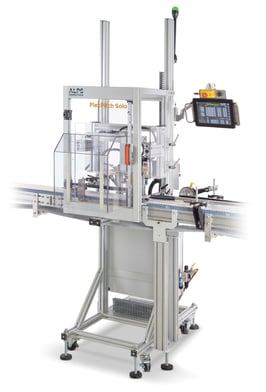
That’s why our engineers developed the ALPS FlexPitch Solo — a moving-head leak-testing system specifically designed to deliver reliable inspection performance for small, unstable, and uniquely shaped containers.
FlexPitch Solo is designed to support container sizes as small as 3 cc while mounting directly over an existing conveyor line (with an optional floor-standing frame). Containers remain on the same conveyor throughout inspection, eliminating the need for transfers.
By integrating a moving-head leak testing system directly into the production line, the FlexPitch Solo enables inspection as part of the blow molding manufacturing process without interrupting product flow.
How FlexPitch Solo Works On The Line
At the core of the FlexPitch Solo is a moving test head that travels with each container during the inspection cycle. Using real-time encoder feedback, the system continuously synchronizes probe movement with conveyor speed to help maintain accurate alignment and consistent seal contact throughout the test.
The probe seals directly at the container finish while the bottle remains in motion, completing the pressure decay test before returning to position for the next container.
This synchronized movement helps minimize the effects of shifting, rotation, and inconsistent container presentation often associated with lightweight, reverse taper, oval, or asymmetrical packaging designs.
FlexPitch Solo's moving-head design is the ideal leak testing solution for hard-to-handle beauty, personal care, and pharmaceutical packaging, including mascara tubes, oval bottles, cosmetic containers, eye droppers, and specialty bottles.
Why the FlexPitch Solo Is Well-Suited for Beauty, Personal Care, and Pharmaceutical Packaging
For manufacturers running challenging container designs, the FlexPitch Solo helps improve inspection consistency while maintaining production efficiency.
Because containers remain on the same conveyor throughout testing, handling variation introduced by transfers and repositioning is reduced. The moving-head design also helps maintain consistent seal engagement, even when containers behave unpredictably during transport through the line. As a result, manufacturers can reduce false rejects associated with container movement while improving overall confidence in leak testing performance.
For production environments running multiple SKUs or with frequently changing package formats, the FlexPitch Solo provides a flexible leak testing solution that adapts to evolving packaging designs without sacrificing throughput or inspection integrity.
FlexPitch Solo is also an excellent solution for stable containers, particularly for blow molding manufacturers running multiple container types on the same production line.
Reliable Quality Inspection for Evolving Packaging Designs in Beauty and Pharmaceutical Applications
Packaging trends and consumer preferences will continue to evolve, especially in the beauty, personal care, and pharmaceutical industries, where container design plays a major role in product differentiation. As packaging formats become more specialized, manufacturers need leak testing systems capable of maintaining reliable inspection performance without disrupting production flow.
The ALPS FlexPitch Solo was engineered to help manufacturers of beauty and pharmaceutical containers confidently inspect unstable, lightweight, and uniquely shaped containers while maintaining product quality and operational efficiency.
Learn more about the ALPS FlexPitch Solo Moving-Head Leak Testing System and discover how it can help you achieve reliable leak testing and quality control.